最新资讯
Latest News

At Hiba Academy Nantong, our rigorous and holistic approach to English ensures that every pupil develops not only fluency in literacy but also the capacity for critical thinking, effective communication, and profound linguistic engagement. Our curriculum is aligned with the English National Curriculum, thoughtfully adapted to meet the specific needs of EAL (English as an Additional Language) learners. But how do these principles translate into the classroom? In this article, Ms Helen Nugent, our Head of Primary English, provides an insight into our methodology across reading, writing, oracy, and differentiated support.

Helen Nugent
Head of Primary English
Reading
From Systematic Phonics to Independent Interpretation
Foundation skills at Hiba are built through Read Write Inc, a systematic synthetic phonics programme that ensures pupils master decoding while simultaneously developing their writing and grammar. This structured progression allows children to transition seamlessly from basic phonics to tackling complex literacy tasks with confidence.

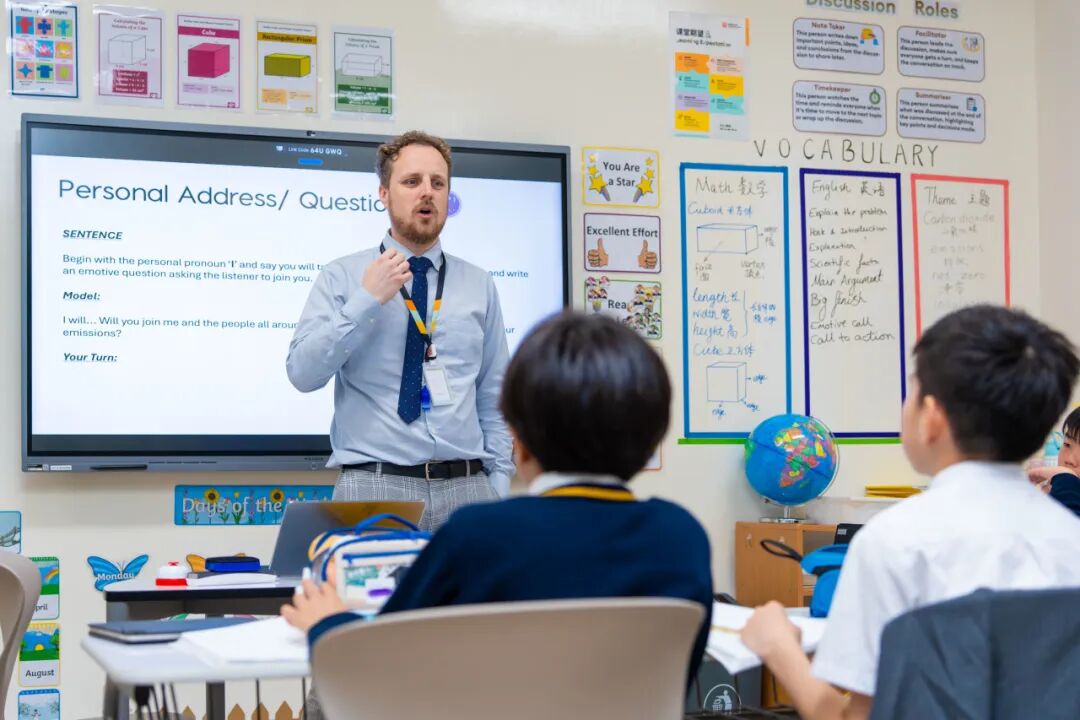
To foster a love for books, we utilise Accelerated Reader, a system that encourages independent reading while monitoring comprehension through interactive quizzes. This ensures that reading is not merely a matter of volume, but of depth and critical reflection. Alongside this, the Cambridge Global English curriculum exposes pupils to diverse texts and contexts, building cultural awareness and cross-genre understanding. In the upper primary years, we will be introducing Destination Reader, an approach that empowers pupils to take ownership of their reading, actively constructing meaning and engaging critically with the text.

Writing
Crafting Every Sentence with Intent
In our writing lessons, the goal is for pupils to move beyond simply finishing a sentence to truly master its craft. We implement Jane Considine’s The Write Stuff methodology, which focuses on the ‘art of the sentence’ from precise vocabulary selection to structural flow and expressive impact.

A cornerstone of this approach is "Sentence Stacking." Much like building with blocks, pupils start with a foundational idea and incrementally add detail and sophistication. This is not about rote-learning grammar rules; it is about conscious choice: "Why did I choose this word?" or "How does this change the tone?" We place heavy emphasis on the editing process, encouraging pupils to refine their work until it meets their own high standards. We want our pupils to understand that writing is a skill honed through practice and reflection.

Oracy
From Speaking Out to Thinking Aloud
While literacy is vital, the ability to articulate thoughts orally is equally essential. Our classrooms are vibrant spaces where pupils have constant opportunities to share ideas, present arguments, and debate with peers. We prioritise "high-quality talk," where pupils are challenged to provide evidence for their views, listen actively to others, and respectfully disagree.


To help pupils externalise their thought processes, we use the Thinking Moves framework. This provides them with the vocabulary of cognition—phrases such as "Thinking ahead...", "I infer that...", or "To weigh up...". By mastering these "moves", pupils can articulate their mental journey clearly, allowing teachers and peers to follow their logic. Our ultimate goal is for pupils to not just speak English, but to use it as a tool for thinking, debating, and persuading.

Challenge and Support
Ensuring No Child is Left Behind
At Hiba Academy Nantong, we treat every child as an individual, ensuring they remain engaged and inspired.
For High Achievers: We provide continuous stretch through more sophisticated texts, complex writing prompts, and high-level classroom discussions to ensure their growth never plateaus.
For Developing Learners: For those newer to English, we provide essential scaffolding. This includes simplified sentence starters, visual aids, and increased oracy practice to build their confidence and ensure they can access the full curriculum.

We believe that with the right balance of support and expectation, every pupil can make substantial progress and become a confident, independent user of the English language.
By blending systematic instructional programmes with a focus on oracy, cognition, and pupil agency, Hiba Academy Nantong transforms high academic standards into daily classroom reality. We meet every child where they are, offering the right level of support and the necessary degree of challenge. Regardless of their starting point, our pupils develop a profound and independent command of English—a skill that serves as the bedrock for their future education.


At Hiba Academy Nantong, our rigorous and holistic approach to English ensures that every pupil develops not only fluency in literacy but also the capacity for critical thinking, effective communication, and profound linguistic engagement. Our curriculum is aligned with the English National Curriculum, thoughtfully adapted to meet the specific needs of EAL (English as an Additional Language) learners. But how do these principles translate into the classroom? In this article, Ms Helen Nugent, our Head of Primary English, provides an insight into our methodology across reading, writing, oracy, and differentiated support.
Helen Nugent
Head of Primary English
Reading
From Systematic Phonics to Independent Interpretation
Foundation skills at Hiba are built through Read Write Inc, a systematic synthetic phonics programme that ensures pupils master decoding while simultaneously developing their writing and grammar. This structured progression allows children to transition seamlessly from basic phonics to tackling complex literacy tasks with confidence.
To foster a love for books, we utilise Accelerated Reader, a system that encourages independent reading while monitoring comprehension through interactive quizzes. This ensures that reading is not merely a matter of volume, but of depth and critical reflection. Alongside this, the Cambridge Global English curriculum exposes pupils to diverse texts and contexts, building cultural awareness and cross-genre understanding. In the upper primary years, we will be introducing Destination Reader, an approach that empowers pupils to take ownership of their reading, actively constructing meaning and engaging critically with the text.
Writing
Crafting Every Sentence with Intent
In our writing lessons, the goal is for pupils to move beyond simply finishing a sentence to truly master its craft. We implement Jane Considine’s The Write Stuff methodology, which focuses on the ‘art of the sentence’ from precise vocabulary selection to structural flow and expressive impact.
A cornerstone of this approach is "Sentence Stacking." Much like building with blocks, pupils start with a foundational idea and incrementally add detail and sophistication. This is not about rote-learning grammar rules; it is about conscious choice: "Why did I choose this word?" or "How does this change the tone?" We place heavy emphasis on the editing process, encouraging pupils to refine their work until it meets their own high standards. We want our pupils to understand that writing is a skill honed through practice and reflection.
Oracy
From Speaking Out to Thinking Aloud
While literacy is vital, the ability to articulate thoughts orally is equally essential. Our classrooms are vibrant spaces where pupils have constant opportunities to share ideas, present arguments, and debate with peers. We prioritise "high-quality talk," where pupils are challenged to provide evidence for their views, listen actively to others, and respectfully disagree.
To help pupils externalise their thought processes, we use the Thinking Moves framework. This provides them with the vocabulary of cognition—phrases such as "Thinking ahead...", "I infer that...", or "To weigh up...". By mastering these "moves", pupils can articulate their mental journey clearly, allowing teachers and peers to follow their logic. Our ultimate goal is for pupils to not just speak English, but to use it as a tool for thinking, debating, and persuading.
Challenge and Support
Ensuring No Child is Left Behind
At Hiba Academy Nantong, we treat every child as an individual, ensuring they remain engaged and inspired.
For High Achievers: We provide continuous stretch through more sophisticated texts, complex writing prompts, and high-level classroom discussions to ensure their growth never plateaus.
For Developing Learners: For those newer to English, we provide essential scaffolding. This includes simplified sentence starters, visual aids, and increased oracy practice to build their confidence and ensure they can access the full curriculum.
We believe that with the right balance of support and expectation, every pupil can make substantial progress and become a confident, independent user of the English language.
By blending systematic instructional programmes with a focus on oracy, cognition, and pupil agency, Hiba Academy Nantong transforms high academic standards into daily classroom reality. We meet every child where they are, offering the right level of support and the necessary degree of challenge. Regardless of their starting point, our pupils develop a profound and independent command of English—a skill that serves as the bedrock for their future education.